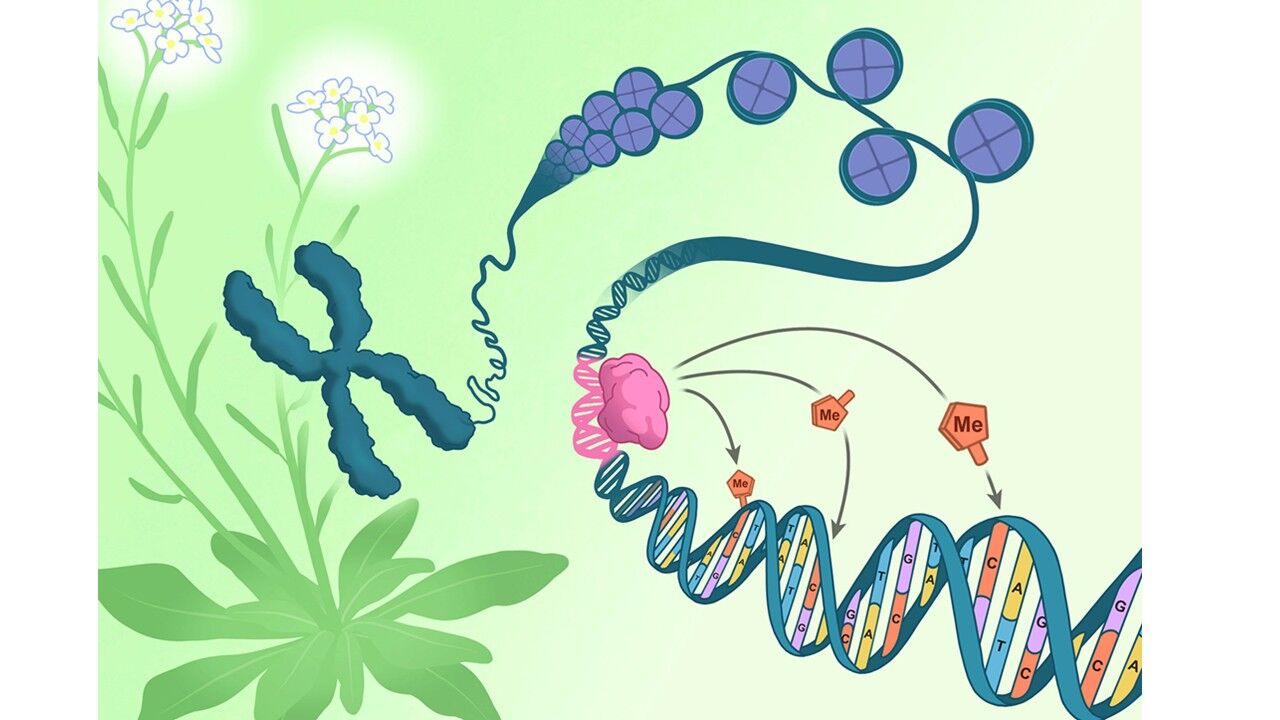
Investigating the metabolic initiation of environmental epigenetic response
Patrick ALLARD is the director of the Laboratory of Environmental Memory at UCLA (University of California, Los Angeles). He will present his research on environmental epigenetics. The lecture will be in English.
PERSONAL STATEMENT
Our work resides at the intersection of genetics, epigenetics, and toxicology. This has been made possible by the PI’s extensive experience in advanced genetics, developmental biology, and toxicology acquired through his training at the University of Paris, McGill University, and Harvard Medical School. Our overarching research objective is to use advances in genomics and bioinformatics to address fundamental gaps in our understanding of how organisms respond to environmental toxicants and retain a molecular memory of these exposures.
Our research therefore takes advantage of multiple model organisms and systems (C. elegans, mouse stem cells) and toxico-(epi)genomics approaches to elucidate the impact of environmental exposures on biological function across the lifecourse and across generations. We have previously shown that state-of-the-art genomics and cellular approachescan be powerful tools to identify the epigenetic requirements behind the transgenerational reproductive impacts from environmental exposures (Truong & Chen, Cell Reports, 2023; Ooi et al, EHP, 2021; Liu et al, FASEB J, 2020; Camacho et al, Cell Reports, 2018). We are interested in combining epigenomic analysis with metabolomics to uncover the role of environmentally-induced metabolic perturbations in guiding epigenetic changes (Verdikt et al, Elife 2023). Our work has been published in high-profile journals including PNAS, Cell Reports, Elife, PLOS Genetics, and Environmental Health Perspectives. Our work has also been recognized by multiple awards and grants including named a Fulbright scholar, receiving the Burroughs Wellcome Innovations in Regulatory Science Award, the Colgate-Palmolive research award, the Johns Hopkins Center for Alternatives to Animal Research grant and most notably several NIH R01 awards, and Templeton Foundation grants. Dr. Allard was also named Global Toxicology Scholar by the Society of Toxicology (2011, 2014) and in 2017 Governor-appointed to California’s Developmental and Reproductive Toxicant Identification Committee. In 2019, Dr. Allard was awarded the New Career Scientist Award by the Reproductive and Developmental Toxicity Specialty Section from the Society of Toxicology. From 2019 until 2023, Dr. Allard was a standing member of the NIH study section “Systemic Injury from Environmental Exposure”, and since 2020, has served as Associate Editor of Environmental Health Perspectives, the premier journal in Environmental Health Sciences.
Representative publications:
1. Verdikt R, Armstrong AA, Cheng J, Hwang YS, Clark AT, Yang X, Allard P. Metabolic memory of Δ9-tetrahydrocannabinol exposure in pluripotent stem cells and primordial germ cells-like cells. Elife. 2023 Dec 27;12:RP88795. doi: 10.7554/eLife.88795. Role: Lead investigator.
2. Truong L, Chen YW, Barrere-Cain R, Levenson MT, Shuck K, Xiao W, da Veiga Beltrame E, Panter B, Reich E, Sternberg PW, Yang X, Allard P. Single-nucleus resolution mapping of the adult C. elegans and its application to elucidate inter- and trans-generational response to alcohol. Cell Reports. 2023 May 23;42(6):112535. doi: 10.1016/j.celrep.2023.112535. Role: Lead investigator.
3. Ooi SKT, Jiang H, Kang Y, Allard P. Examining the Developmental Trajectory of an in Vitro Model of Mouse Primordial Germ Cells following Exposure to Environmentally Relevant Bisphenol A Levels. Environ Health Perspect. 2021 Sep;129(9):97013. doi: 10.1289/EHP8196. Role: Lead investigator.
4. Camacho J, Truong L, Kurt Z, Morselli M, Gutierrez G, Pellegrini M, Yang Xia, Allard P. The memory of environmental chemical exposure in C. elegans is dependent on the Jumonji demethylases jmjd-2 and jmjd-3/utx-1. Cell Reports. May 22;23(8):2392-2404. doi: 10.1016/j.celrep.2018.04.078. PMID: 29791850 PMCID: PMC6003705. Role: Lead investigator.
CONTRIBUTIONS TO SCIENCE
Below is a list of 4 significant contributions to science from my work as a graduate student, post-doctoral fellow and as investigator. These four contributions share the common aspect of relying on the development of innovative approaches to examine aspects of developmental and reproductive biology from an environmental perspective that were previously difficult to examine. A comprehensive list of my publications is available here: https://www.ncbi.nlm.nih.gov/myncbi/patrick.allard.1/bibliography/public/
Apply innovative high-throughput and computational platforms to investigate the mechanisms of action of environmental exposures on reproductive and physiological endpoints.
Despite decades of research in the mechanisms of Toxicity, our understanding of our chemicals make us sick is still profoundly limited. Reproduction has historically been difficult to study as it unfolds over a very long time-span - months to years in mammals and because of the high number of environmental compounds present in our environment. Thus, my research aims to develop new approaches to identify the mechanisms of environmental exposures on complex outcomes including reproduction. To this aim, we mobilize the cytological and genetic advantages of the nematode C. elegans to understand the reproductive pathways that are disrupted by environmental exposures.
a. Ulaganathan G, Jiang H, Canio N, Oke A, Armstrong SS, Abrahamsson D, Varshavsky JR, Lam J, Cooper C, Robinson JF, Fung JC, Woodruff TJ, Allard P. Screening and characterization of 133 physiologically-relevant environmental chemicals for reproductive toxicity. Reprod Toxicol. 2024 Jun;126:108602. doi: 10.1016/j.reprotox.2024.108602. Epub 2024 May 8. Role: Lead investigator.
b. Chen Y., Shu L., Qiu Z., Lee D.Y., Settle J.S., Que Hee S., Telesca D., Yang X. and Allard P. Exposure to the BPA-Substitute Bisphenol S Causes Unique Alterations of Germline Function. PLOS Genetics 2016 Jul 29;12(7):e1006223. PMID: 27472198 PMCID: PMC4966967 Role: Lead investigator.
Molecular basis of the epigenetic memory of environmental exposures
The epigenome represents the collection of molecular tags associated with chromatin that modify gene expression in a mitotically and/or meiotically heritable fashion without altering the DNA sequence. The epigenome is remarkably responsive to environmental cues and is a central player in the transcriptional and physiological response to environmental exposures. However, how environmental chemicals trigger a deregulation of the epigenome is still poorly understood. Thus, our research program has been focused on elucidating the genetic and epigenetic requirements underlying long-lasting toxicological responses, thereby establishing causation. To this aim, we use a combination of model systems; C. elegans, as well as mouse primordial germ cells derived from embryonic stem cells (called PGCLCs), to understand how a single exposure may elicit a long- lasting memory of this exposure. We were the first group to identify the epigenetic machinery responsible for the inheritance of health effects across generations stemming from environmental chemical exposure. This work initially focused on Bisphenol A and is now encompassing other common exposures such as arsenic, PFAS, cigarette (nicotine), and cannabis (THC).
a. Truong L, Chen YW, Barrere-Cain R, Levenson MT, Shuck K, Xiao W, da Veiga Beltrame E, Panter B, Reich E, Sternberg PW, Yang X, Allard P. Single-nucleus resolution mapping of the adult C. elegans and its application to elucidate inter- and trans-generational response to alcohol. Cell Rep. 2023 Jun 27;42(6):112535. doi: 10.1016/j.celrep.2023.112535.
b. Verdikt R, Armstrong AA, Cheng J, Hwang YS, Clark AT, Yang X, Allard P. Metabolic memory of Δ9-tetrahydrocannabinol exposure in pluripotent stem cells and primordial germ cells-like cells. Elife. 2023 Dec 27;12:RP88795. doi: 10.7554/eLife.88795. Role: Lead investigator.
c. Ooi SKT, Jiang H, Kang Y, Allard P. Examining the Developmental Trajectory of an in Vitro Model of Mouse Primordial Germ Cells following Exposure to Environmentally Relevant Bisphenol A Levels. Environ Health Perspect. 2021 Sep;129(9):97013. doi: 10.1289/EHP8196
d. Camacho J, Truong L, Kurt Z, Morselli M, Gutierrez G, Pellegrini M, Yang Xia, Allard P. The memory of environmental chemical exposure in C. elegans is dependent on the Jumonji demethylases jmjd-2 and jmjd-3/utx-1. Cell Reports. May 22;23(8):2392-2404. doi: 10.1016/j.celrep.2018.04.078. PMID: 29791850 PMCID: PMC6003705. Role: Lead investigator.
Facilitating the understanding of epigenetic data and its integration in the process of risk assessment
The field of Toxicology that has seen a historical attempt at reshaping itself in the US since the mid-2000’s - a shift that has been officialized by the release of the National Research Council report entitled “Toxicity Testing in the 21st century: a vision and a strategy”. Epigenetics fits squarely in that vision since the addition of this layer of information carries tremendous potential for understanding the mechanism of environmentally-induced disease etiology and for their use in predictive toxicology. Yet, the very definition of the term Epigenetics is heterogeneous, and the implication of epigenetic findings are often misunderstood and misinterpreted by both scientists and the general public. My work therefore aims to analyze and dissect the roadblocks in the integration of toxicoepigenomics data (and other NAMs) into risk assessment and propose frameworks that would greatly facilitate this integration.
a. Le Goff A, Louvel S, Boullier H, Allard P. Toxicoepigenetics for Risk Assessment: Bridging the Gap Between Basic and Regulatory Science. Epigenet Insights. 2022 Jul 15;15:25168657221113149. doi: 10.1177/25168657221113149. Role: co-Lead investigator.
b. Dubois M, Louvel S, Le Goff A, Guaspare C, Allard P. Epigenetics in the public sphere: interdisciplinary perspectives. Environ Epigenet. 2019 Oct 24;5(4):dvz019. doi: 10.1093/eep/dvz019. eCollection 2019 Oct. Role: Lead investigator.
c. Angrish MM, Allard P, McCullough SD, Druwe IL, Helbling Chadwick L, Hines E, Chorley BN. Epigenetic Applications in Adverse Outcome Pathways and Environmental Risk Evaluation. Environ Health Perspect. 2018 Apr 12;126(4):045001. doi: 10.1289/EHP2322. Role: co- investigator.
Identifying the environmental component in the etiology of undiagnosed human diseases
I worked with the NIH/NHGRI Undiagnosed Disease Network (UDN). The UDN aimed to provide state-of- the-art diagnostic and patient care to provide insights into conditions of uncertain etiology. My work aimed to identify the environmental components that may cause, contribute, or modify the disease of these patients. We implemented a comprehensive environmental survey to identify significant environmental exposures and potential gene-environment interactions. I co-led the UDN Environmental Working Group with Dr. Edwin Silverman, and operated at the network level to screen all patients applying or accepted into the UDN.
a. Silverman EK, Allard P, Loscalzo J, Mulvihill J, Korrick S. Environmental Exposures Are Inversely Associated with Genetic Diagnosis in the Undiagnosed Diseases Network. American Journal of Medical Genetics Part A 2019: 179 (6), 958-965. Co-Lead.
b. RB Ramoni, JJ Mulvihill, DR Adams, P Allard, EA Ashley, JA Bernstein, et al. The Undiagnosed Diseases Network: Accelerating Discovery about Health and Disease.The American Journal of Human Genetics 100 (2), 185-192. 2017. Co-Lead.
c. Lee H, Huang AY, Wang LK, Yoon AJ, Renteria G, Eskin A, Signer RH, Dorrani N, Nieves-Rodriguez S, Wan J, Douine ED, Woods JD, Dell'Angelica EC, Fogel BL, Martin MG, Butte MJ, Parker NH, Wang RT, Shieh PB, Wong DA, Gallant N, Singh KE, Tavyev Asher YJ, Sinsheimer JS, Krakow D, Loo SK, Allard P, Papp JC; Undiagnosed Diseases Network, Palmer CGS, Martinez-Agosto JA, Nelson SF. Diagnostic utility of transcriptome sequencing for rare Mendelian diseases. Genet Med. 2020 Mar;22(3):490-499. doi: 10.1038/s41436-019-0672-1. Collaborator.
By browsing our site you accept the installation and use cookies on your computer.
Know more
About cookies
What is a "cookie"?
A "cookie" is a piece of information, usually small and identified by a name, which may be sent to your browser by a website you are visiting. Your web browser will store it for a period of time, and send it back to the web server each time you log on again.
Different types of cookies are placed on the sites:
Cookies strictly necessary for the proper functioning of the site
Cookies deposited by third party sites to improve the interactivity of the site, to collect statistics
Cookies strictly necessary for the site to function
These cookies allow the main services of the site to function optimally. You can technically block them using your browser settings but your experience on the site may be degraded.
Furthermore, you have the possibility of opposing the use of audience measurement tracers strictly necessary for the functioning and current administration of the website in the cookie management window accessible via the link located in the footer of the site.
Technical cookies
Name of the cookie
Purpose
Shelf life
CAS and PHP session cookies
Login credentials, session security
Session
Tarteaucitron
Saving your cookie consent choices
12 months
Audience measurement cookies (AT Internet)
Name of the cookie
Purpose
Shelf life
atid
Trace the visitor's route in order to establish visit statistics.
13 months
atuserid
Store the anonymous ID of the visitor who starts the first time he visits the site
13 months
atidvisitor
Identify the numbers (unique identifiers of a site) seen by the visitor and store the visitor's identifiers.
13 months
About the AT Internet audience measurement tool :
AT Internet's audience measurement tool Analytics is deployed on this site in order to obtain information on visitors' navigation and to improve its use.
The French data protection authority (CNIL) has granted an exemption to AT Internet's Web Analytics cookie. This tool is thus exempt from the collection of the Internet user's consent with regard to the deposit of analytics cookies. However, you can refuse the deposit of these cookies via the cookie management panel.
Good to know:
The data collected are not cross-checked with other processing operations
The deposited cookie is only used to produce anonymous statistics
The cookie does not allow the user's navigation on other sites to be tracked.
Third party cookies to improve the interactivity of the site
This site relies on certain services provided by third parties which allow :
to offer interactive content;
improve usability and facilitate the sharing of content on social networks;
view videos and animated presentations directly on our website;
protect form entries from robots;
monitor the performance of the site.
These third parties will collect and use your browsing data for their own purposes.
How to accept or reject cookies
When you start browsing an eZpublish site, the appearance of the "cookies" banner allows you to accept or refuse all the cookies we use. This banner will be displayed as long as you have not made a choice, even if you are browsing on another page of the site.
You can change your choices at any time by clicking on the "Cookie Management" link.